
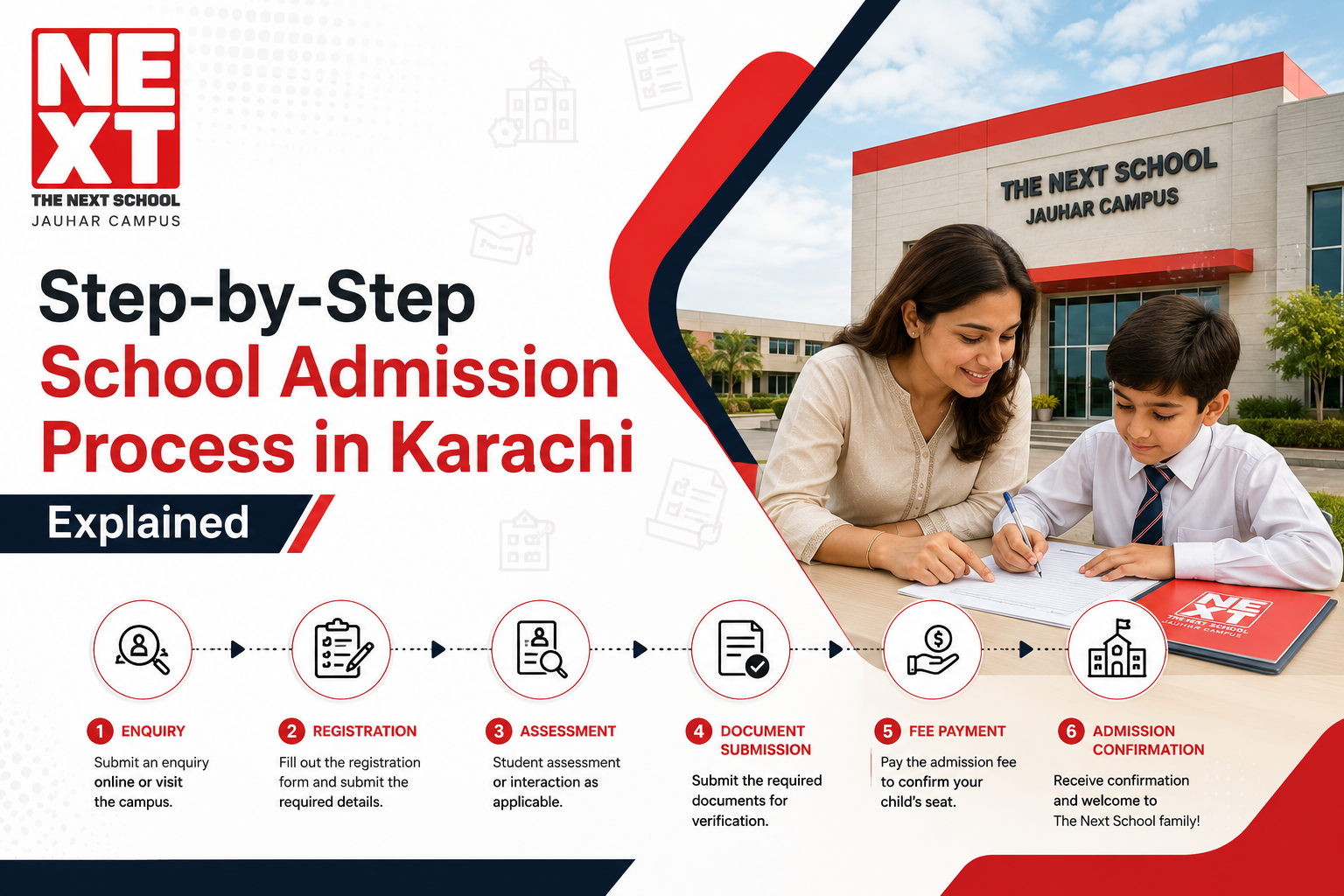
Ask any parent in Karachi who’s been through it, and they’ll tell you the same thing: the school admission process in Karachi looks simple on paper and then somehow eats up an entire month of your life. One school wants a birth certificate attested by a gazetted officer. Another wants three passport photos on a white background, not off-white, not cream — white. And somewhere in between you’re also trying to prep your five-year-old for an “interview” that’s really just someone asking if they know their colors.
So here’s an attempt to lay it all out in order, the way it actually plays out, not the way a school’s website makes it sound.
Start With What You Actually Want, Not What Sounds Good
Before you touch a single application, figure out your non-negotiables. Curriculum matters — Matric, O and A Levels, or Cambridge — but so does the daily commute, the fee you can realistically sustain for the next several years (not just this one), and whether the school’s vibe matches your kid. A lot of parents chasing the best school admission in Karachi apply to eight or nine places “just in case,” and honestly, it just multiplies the paperwork without multiplying the odds much. Pick four or five that genuinely fit, visit if you can, and go from there.
Watch the Calendar Like a Hawk
This part trips people up more than anything else. School admission open Karachi announcements aren’t standardized — some schools start taking applications in October for the next academic year, others wait until January, and a few just accept students whenever there’s a seat free. If you’re eyeing school admissions 2026 Karachi, don’t assume every school follows the same timeline. Follow the schools you’re interested in on social media or check their websites every couple of weeks around September onward. Missing a window by even a few days can mean waiting a full year.
Read the Fine Print on Requirements
Every school sets its own bar. School admission requirements might include an age cutoff (and schools are stricter about this than you’d expect — a few weeks under or over the line and they won’t budge), a transfer certificate from the previous school, and sometimes a minimum grade average. Private school admissions in Karachi tend to be pickier about school admission criteria than government schools, so actually read the prospectus instead of skimming it.
Fill Out the Form — Ideally Online
This is where things have genuinely improved over the last few years. A good chunk of schools now run the whole school application process online: form, document uploads, fee payment, all from your phone. If you want a platform that keeps the process organized instead of chasing paper trails across five different school offices, The Next School is worth a look.
Get Your Paperwork Together Early
Nothing stalls an application faster than missing documents. You’ll typically need:
- Birth certificate (original plus a couple of copies)
- Passport-size photos, recent ones
- Leaving certificate or last report card from the previous school
- CNIC copies of both parents
- Immunization card, especially for younger kids
Scan everything now, even if you’re not applying anywhere yet. Future-you will thank present-you.
The Test, the Interview, and Trying Not to Panic
Most well-known schools, and pretty much all Cambridge school admissions in Karachi, involve some kind of written test — usually English, Math, and general awareness — plus a short interview with the child, sometimes the parents too. It’s not meant to be a pressure cooker. Schools are mostly checking whether your child will keep up comfortably, not looking for a prodigy. A kid who’s had breakfast and slept properly the night before will do better than one who’s been quizzed nonstop for a week.
Pay the Fee, Actually On Time
Once the offer comes through, there’s usually a fee voucher attached with a deadline. Pay it. This isn’t the step to procrastinate on — schools move fast to offer the seat to a waitlisted family if you miss the payment window, and there’s rarely any flexibility on this once it happens.
Orientation Wraps It Up
The final stage of the school enrollment process is usually a short orientation — meeting the class teacher, a campus walk-through, picking up the uniform list and books. Once that’s done, you’re through the whole school admission procedure and your child officially has a seat.
A Word on Online Admissions
Online school admission in Karachi isn’t a nice-to-have anymore, it’s pretty much expected. It saves you from standing in line at five different school offices in one week, and you can track where each application stands from your phone. If that convenience matters to you, look specifically for schools (or platforms) offering a genuinely complete digital school application process — not just a PDF form you still have to print and hand-deliver.
Questions Parents Usually Ask
When do school admissions open in Karachi?
Mostly between October and February for the next academic year, though some schools take applications year-round depending on available seats.
What documents do I need?
Birth certificate, recent photos, previous school records, and CNIC copies of both parents, at minimum. Some schools ask for more.
Is there always an entry test?
Not always, but most private and Cambridge-system schools include one, usually paired with a short interview.
Can the whole process be done online?
Increasingly, yes — from filling the form to paying fees, a lot of schools now handle it digitally.
Bottom Line
The school admission process in Karachi isn’t complicated once you know the order of operations: shortlist, track deadlines, check the requirements, apply, gather documents, get through the test, pay on time, show up to orientation. Start earlier than feels necessary. You’ll thank yourself in March when everyone else is still scrambling.