
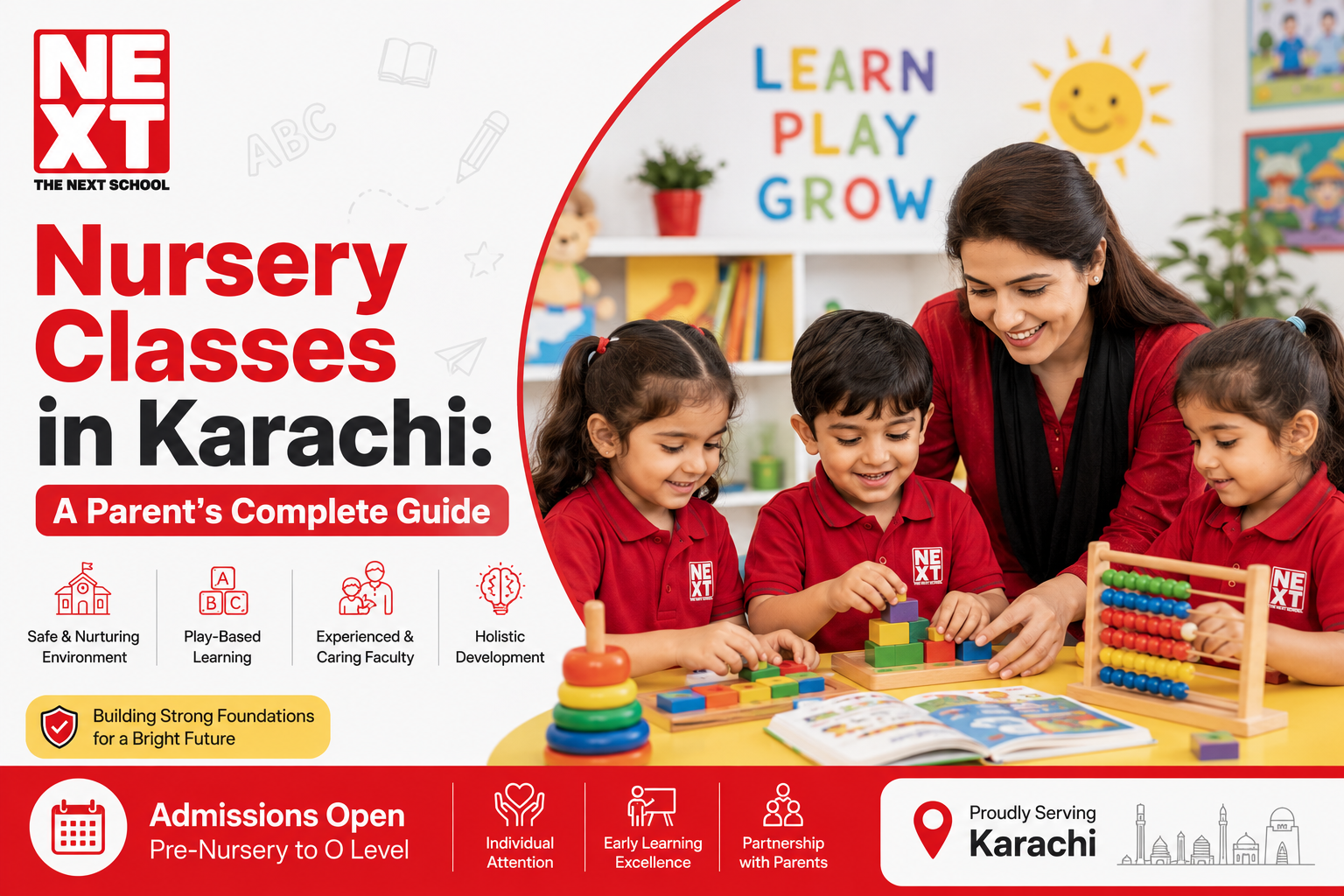
Nursery is such a small word for something that carries so much weight for parents. It’s your child’s first real classroom, their first teacher who isn’t you, their first taste of structure outside the home — and naturally, you want to get it right. In a city like Karachi, with private nursery schools scattered across every neighborhood, “getting it right” means understanding what actually happens inside a good nursery classroom, not just which school has the nicest building.
So let’s talk about what nursery classes in Karachi should actually look like, what a strong curriculum covers at this age, and how to genuinely evaluate your options rather than just picking based on reputation alone.
What Is Nursery, Really?
Nursery sits at the very beginning of a child’s formal education — typically the stage right after Playgroup or Pre-Nursery, and just before Kindergarten. It’s not really about academics in the way people sometimes assume. Good nursery classes are built around foundational development: social skills, communication, motor skills, early literacy and numeracy exposure, and — perhaps most importantly — helping a young child feel safe and confident in a structured environment away from home.
Parents sometimes worry their child “isn’t learning enough” if a nursery classroom looks more like organized play than a traditional lesson. In reality, that’s exactly what a good nursery program should look like. At this age, learning happens through play, repetition, sensory experience, and social interaction — not worksheets.
What’s the Best Age to Join Nursery Classes?
Across Karachi, most nursery classes admit children around age 3 to 4, with Pre-Nursery or Playgroup options available slightly earlier for children around 2 to 3, depending on the school. Schools typically set a specific age cutoff — often calculated as of a date in August or September — so two children born just weeks apart might end up in different classes depending on where that cutoff falls.
There’s no universal “correct” age beyond what each school specifies, but a good general guide is readiness rather than just birthdate. A child who can manage basic independence — using the toilet, communicating simple needs, separating from a parent for a few hours without significant distress — is generally ready for nursery classes for 3-year-olds, even if their exact age sits right at a school’s cutoff line.
What a Good Nursery Curriculum Actually Covers
This is where parents should really focus their attention when comparing schools, because a strong early childhood education program in Karachi should hit several developmental areas, not just one.
Language and early literacy — storytelling, vocabulary building, and pre-reading skills introduced through songs, rhymes, and interactive activities rather than formal instruction. Early numeracy — counting, shapes, and basic pattern recognition, again taught through play rather than drills. Motor skills development — both fine motor skills (holding crayons, simple cutting, building blocks) and gross motor skills (running, climbing, balance) through structured physical activity. Social and emotional development — sharing, turn-taking, expressing emotions appropriately, and building the confidence to interact with peers and teachers. Creative expression — art, music, and imaginative play, which matter far more at this age than people often realize for cognitive development. Sensory learning — hands-on activities that engage touch, sound, and movement, which is how young children genuinely absorb information best.
A nursery classroom that’s doing this well won’t necessarily look impressive on paper. It’ll look like a room full of children playing, singing, and exploring — with a curriculum quietly structured underneath all of it.
How to Choose the Right Nursery School
With so many private nursery schools in Karachi to choose from, here’s what actually matters when narrowing it down.
- Teacher experience with early years specifically. Teaching a 3-year-old is a completely different skill from teaching an older child. Ask directly whether staff have specific early-years training, not just general teaching credentials.
- Class size. Smaller nursery classes mean more individual attention, which matters enormously for children still learning to navigate a group setting.
- The physical environment. Look for clean, safe, genuinely child-friendly spaces — soft flooring, age-appropriate furniture, secured outdoor play areas. A school’s physical setup tells you a lot about how seriously they take this age group.
- Daily structure and routine. Ask what a typical day actually looks like. A strong nursery program balances structured activities, free play, rest, and social time in a predictable rhythm that helps young children feel secure.
- Parent communication. At this age, you’ll want regular updates on how your child is settling in, socially and developmentally. A school with a clear, consistent communication system with parents is generally a good sign of overall organization.
- Location and commute. This matters more at the nursery stage than people expect. A long daily commute is genuinely hard on a very young child, and a slightly less prestigious school close to home often serves your child better than a longer trip to a more well-known one.
Visiting a School Before You Decide
If you can, visit any nursery school in person before enrolling, rather than deciding purely from a website. Watch how teachers actually interact with children during a real classroom moment — not just during a scheduled tour. Notice whether children seem genuinely engaged and comfortable, or anxious and quiet. These details tell you more about the real day-to-day experience than any prospectus can.
It’s also worth asking to see the daily schedule and a sample of the curriculum plan. A school that can walk you through exactly what a typical week looks like — not just vague language about “holistic development” — is usually one that’s genuinely thought through its approach to this age group.
Common Questions
What’s the difference between Playgroup, Pre-Nursery, and Nursery?
These stages roughly correspond to increasing age — Playgroup and Pre-Nursery for children around 2 to 3, and Nursery typically for ages 3 to 4. The exact terminology and age ranges vary somewhat between schools, so it’s worth confirming directly.
Should nursery classes include academic instruction like reading and writing?
Some exposure to early literacy and numeracy is normal and healthy, but it should be introduced through play and interactive activities rather than formal instruction or heavy worksheets at this age.
How many hours should a nursery class run?
This varies by school, but most nursery programs run a partial school day rather than a full one, balancing structured learning with rest and free play appropriate for young children.
Is a smaller nursery school better than a larger one?
Not necessarily in terms of quality, but smaller class sizes within any school generally allow for more individual attention, which matters a lot at this developmental stage.
Setting the Right Foundation
Choosing nursery classes in Karachi isn’t really about finding the most academically rigorous option — it’s about finding an environment where your child feels safe, engaged, and genuinely excited to learn through play and exploration. Focus on the curriculum’s balance across development areas, the quality of teacher interaction, and how your child responds during an actual visit, and you’ll have a far better sense of fit than any brochure could offer.
The Next School operates nursery and early years programs across multiple campuses in Karachi — including Gulshan-e-Iqbal, North Nazimabad, PECHS, Bahadurabad, and Clifton — with a modern, blended approach to early childhood education. If you’re exploring nursery classes for your child, get in touch to learn more about the campus nearest you.